

®دسفوناک
الاسم العام: ديفيروكسامين ميسيلات
شكل الدواء: مسحوق ليُوفِّلِيزي يحتوي على 500 مليجرام من ديفيروكسامين ميسيلات لتحضير محلول قابل للحقن
فئة الدواء: عامل مخلب
دواعي الاستعمال: يُستخدم هذا الدواء في علاج التسمم الحاد بالحديد أو زيادته المزمنة في الدم.
ديفروناك®
ديفروناك® (ديفيروكسامين ميسيلات) هو عامل مخلب يتفاعل مع الأيونات الثلاثية (مثل الحديد) مما يساعد على إفرازها عبر البول؛ لذلك فإن ديفروناك® يُستخدم في علاج التسمم بالحديد أو الألومنيوم.
دواعي استعمال ديفروناك®
علاج التسمم الحاد بالحديد
علاج مستوى الحديد المرتفع في الدم بشكل مزمن نتيجة نقل الدم المتكرر في حالات مثل الثَّلاسيميا الكبرى أو فقر الدم المنجلي
تشخيص وعلاج التسمم بالألومنيوم في حالات الفشل الكلوي المزمن
شكل الدواء ديفروناك®
مسحوق ليُوفِّلِيزي يحتوي على 500 مليجرام من ديفيروكسامين ميسيلات لتحضير محلول قابل للحقن
طريقة تحضير ديفروناك®
للحقن تحت الجلد أو وريدياً، يتم إضافة 5 مل من الماء القابل للحقن إلى محتويات القارورة للحصول على محلول بتركيز 95 مليجرام لكل مل.
للحقن العضلي، يجب إضافة 2 مل من الماء القابل للحقن إلى محتويات القارورة للحصول على محلول بتركيز 213 مليجرام لكل مل.
يُستخدم الحقن العضلي للدواء غالباً في المرضى المصابين بالتسمم الحاد بالحديد الذين لا يعانون من أعراض شديدة؛ ومع ذلك يُفضل الحقن الوريدي بشكل عام.
يمكن تخفيف ديفروناك® مع المحاليل التالية للحقن الوريدي:
o كلوريد الصوديوم 0.9%
o ديكستروز 5%
o رينجر لاكتات
يجب أن يكون المحلول النهائي شفاف وعديم اللون وحتى أصفر فاتح. في حالة رؤية أي جسيمات أو تعكير، يجب عدم استخدام الدواء.
طريقة حقن ديفروناك®
يمكن وصف هذا الدواء للحقن العضلي أو الوريدي أو حقنة تحت الجلد ببطء.
لتجنب حدوث آثار جانبية في الحقن الوريدي، من الأفضل أن تكون سرعة الحقن 15 مليجرام لكل كيلوغرام في الساعة أو أقل.
مؤشرات الرقابة عند استخدام ديفروناك®
مستوى الحديد في الدم، الفيريتين والقدرة الكلية على الارتباط بالحديد (TIBC)
تعداد كامل لخلايا الدم
وظائف الكلى والكبد
الحالة البصرية والسمعية في حالة الاستخدام الطويل الأمد
نمو ووزن الجسم للأطفال كل ثلاثة أشهر
مستوى الألومنيوم في الدم لدى مرضى الغسيل الكلوي
موانع استعمال ديفروناك®
الحساسية لديفيروكسامين أو لأي من مكونات التركيبة
الإصابة بأمراض الكلى الشديدة
عدم إنتاج البول
التحذيرات والاحتياطات عند استخدام ديفروناك®
· العلاج بديفيروكسامين قد يزيد من احتمال الإصابة بأنواع مختلفة من العدوى. في حالة ظهور أعراض عدوى مثل حمى، قشعريرة، التهاب حلقي حاد، ألم أذني، سعال، قشع زائد أو تغيير في لون القشع، شعور بالألم أثناء التبول وتقرحات الفم، عليك إبلاغ الطبيب.
· قد يسبب هذا الدواء تغير لون البول إلى الوردي، الأحمر أو البرتقالي.
· قد يؤدي ديفيروكسامين إلى تفاقم أعراض الوهن العضلي الوبيل. إذا كنت مصاباً بهذا المرض، عليك إبلاغ الطبيب.
· إذا كنت مصاباً بأمراض القلب، تجنب تناول فيتامين سي المستقل مع ديفيروكسامين.
· إذا كنت تعاني من أي تغيير في الحالة البصرية أو السمعية عليك إبلاغ الطبيب فوراً.
· في حالة ظهور أعراض مشاكل رئوية أو تنفسية، مثل ضيق في التنفس، سعال أو حمى، عليك إبلاغ الطبيب.
· عند استخدام ديفيروكسامين للأطفال، راقب نمو الطفل.
استخدام ديفروناك® أثناء الحمل والرضاعة
إذا كنتِ في فترة الحمل أو الرضاعة أو تنوين الحمل، عليك استشارة الطبيب قبل استخدام ديفيروكسامين.
الأعراض الجانبية لديفروناك®
أي دواء قد يسبب بعض الأعراض الجانبية غير المرغوب فيها، على الرغم من أن هذه الأعراض لا تظهر عند جميع الأشخاص. من بين الأعراض المحتملة لهذا الدواء:
· تغير لون البول
· صداع، دوار والشعور بالوخز
· انخفاض ضغط الدم وخفقان القلب
· تفاعلات في مكان الحقن (مثل الاحمرار، الحكة، الحرقة وغيرها)، ظهور بقع حمراء على الجلد وطفح جلدي
· تشنج أو ألم عضلي
· ألم البطن، إسهال، غثيان واستفراغ
· حمى
· ارتفاع إنزيمات الكبد
التداخلات الدوائية لديفروناك®
يجب استشارة الطبيب أو الصيدلي بخصوص استخدام ديفيروكسامين مع أدوية أو مكملات أخرى.
تغليف ديفروناك®
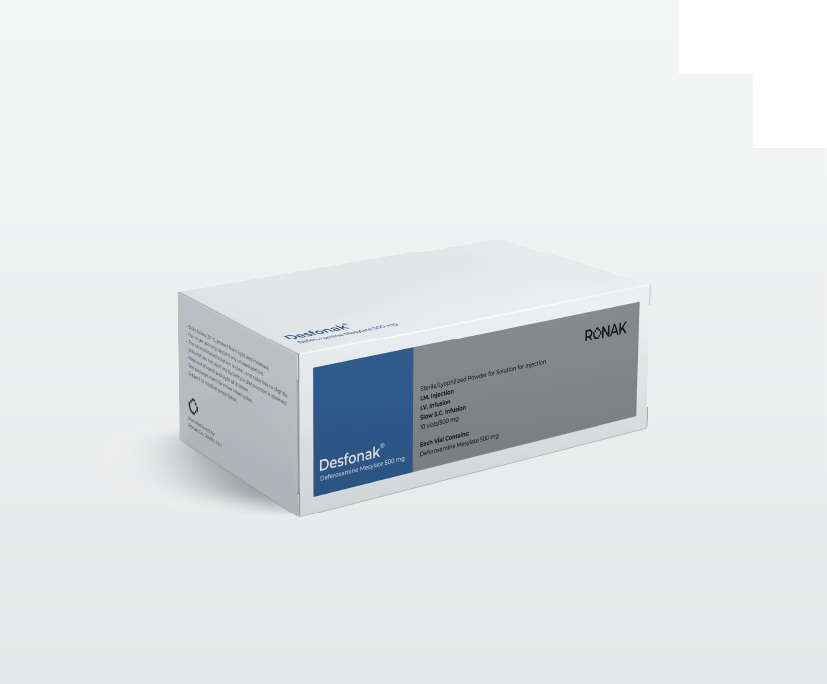
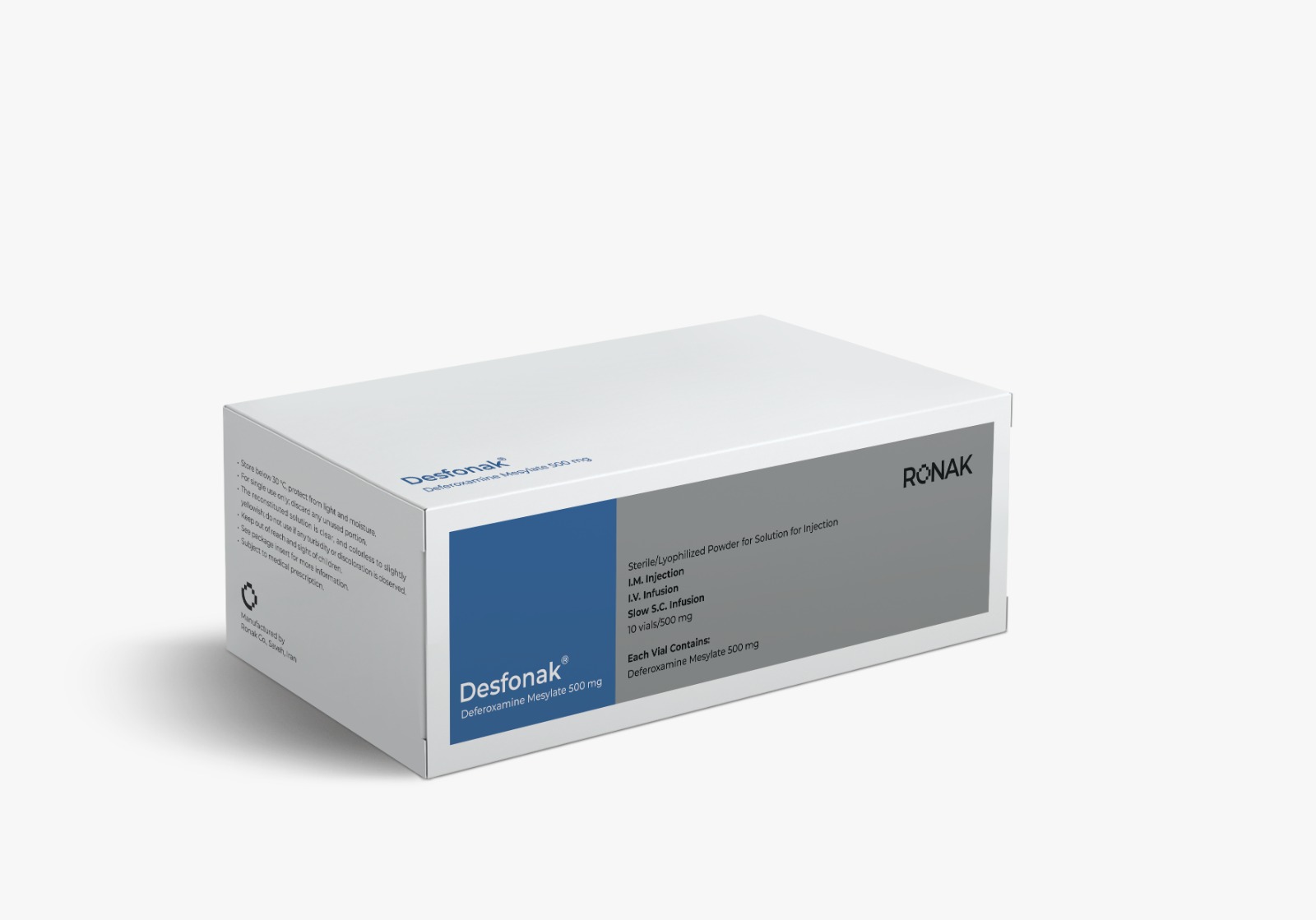
كل علبة تحتوي على 10 قوارير من ديفروناك®.
شروط حفظ ديفروناك®
احتفظ بالدواء بعيداً عن رؤية ومتداول الأطفال.
احفظ الدواء في درجة حرارة 25 درجة مئوية، بعيداً عن الضوء والرطوبة.
يمكن استخدام الدواء حتى نهاية الشهر المذكور في تاريخ انتهاء الصلاحية. يجب تجنب استخدام أو تخزين الأدوية منتهية الصلاحية.
احتفظ بالدواء في العبوة الأصلية حتى وقت الاستخدام.
المراجع
1) معلومات عن دواء ديفيروكسامين، UpToDate 2025
2) http://www.medicines.org.uk/emc/product/3813/smpc
Desfonak® is a chelating agent that binds to trivalent metal ions (such as iron), facilitating their excretion via urine. Therefore, Desfonak® is used in the management of iron and aluminum poisoning.
- Treatment of acute iron poisoning
- Treatment of chronic iron overload due to repeated blood transfusions in conditions such as thalassemia major or sickle cell anemia
- Diagnosis and treatment of aluminum toxicity in the setting of chronic renal failure
Lyophilized powder containing 500 mg deferoxamine mesylate for preparation of injectable solution
For subcutaneous or intravenous administration of Desfonak®, add 5 mL of Water for Injection to the vial contents to obtain a solution with a final concentration of 95 mg/mL.
For intramuscular administration, add 2 mL of Water for Injection to the vial contents to obtain a solution with a final concentration of 213 mg/mL.
Intramuscular administration is primarily used in patients with acute iron poisoning who do not present with severe symptoms; however, intravenous administration is generally preferred.
Desfonak® may be further diluted with the following solutions for intravenous administration:
- Sodium chloride 0.9%
- Dextrose 5%
- Lactated Ringer’s solution
The final solution should be clear and colorless to pale yellow. If any particulate matter or turbidity is observed, the solution must not be used.
This medication may be administered via intramuscular, intravenous, or slow subcutaneous injection.
To reduce the risk of adverse reactions during intravenous administration, the infusion rate should not exceed 15 mg/kg/hour.
- Serum iron levels, ferritin, and total iron-binding capacity (TIBC)
- Complete blood count (CBC)
- Renal and hepatic function
- Visual and auditory function during long-term therapy
- Growth and body weight in pediatric patients every three months
- Serum aluminum levels in dialysis patients
- Hypersensitivity to deferoxamine or any component of the formulation
- Severe renal impairment
- Anuria
Treatment with deferoxamine may increase susceptibility to various infections. If signs of infection occur, including fever, chills, severe sore throat, ear pain, cough, excessive or discolored sputum, painful urination, or oral ulcers, the physician should be informed immediately.
Administration of this medication may cause discoloration of urine to pink, red, or orange.
Deferoxamine may exacerbate symptoms of myasthenia gravis. Patients with this condition should inform their physician prior to use.
In patients with cardiac disease, concomitant use of vitamin C with deferoxamine should be avoided unless medically advised.
Any changes in vision or hearing should be reported to a physician immediately.
Symptoms suggestive of pulmonary or respiratory complications, such as dyspnea, cough, or fever, require prompt medical attention.
In pediatric patients receiving deferoxamine, growth parameters should be regularly monitored.
If you are pregnant, breastfeeding, or planning pregnancy, consult your physician before using deferoxamine.
Like all medications, deferoxamine may cause adverse effects, although not all patients experience them. Potential adverse reactions include:
- Urine discoloration
- Headache, dizziness, and paresthesia
- Hypotension and palpitations
- Injection site reactions (including erythema, pruritus, burning sensation, etc.), skin rash, and urticaria
- Muscle spasms or myalgia
- Abdominal pain, diarrhea, nausea, and vomiting
- Fever
- Elevated liver enzymes
Concomitant use of deferoxamine with other medications or supplements should be undertaken only under the supervision of a physician or pharmacist.
Each package contains 10 vials of Desfonak®.
- Keep out of reach and sight of children.
- Store below 25°C, protected from light and moisture.
- Use only until the expiration date indicated on the packaging. Do not use or store expired medication.
- Keep the product in its original packaging until use.
- Deferoxamine: Drug information, UpToDate 2025
- http://www.medicines.org.uk/emc/product/3813/smpc