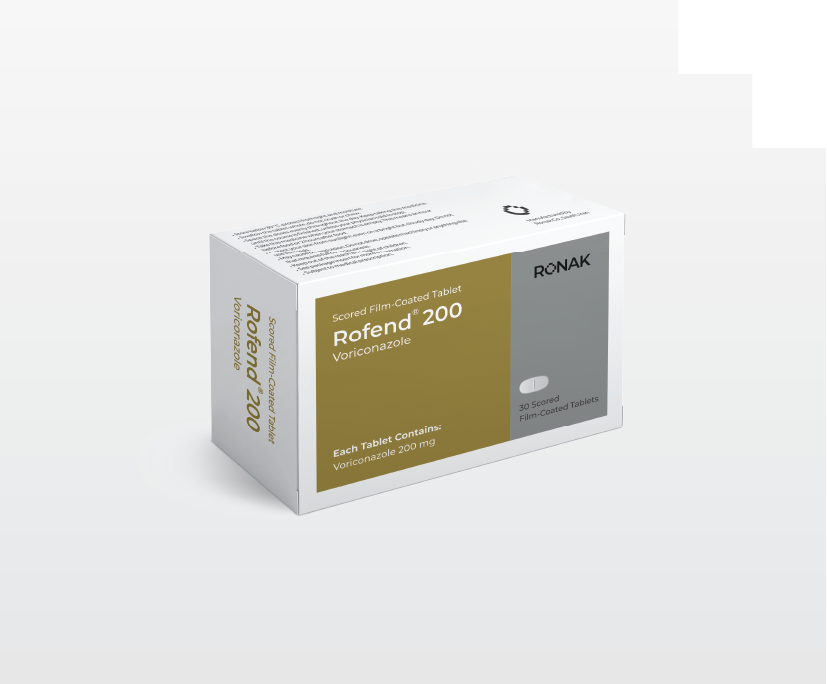


Rofend®
Generic name: Voriconazole
Dosage form: 200 mg film-coated scored tablet
Drug class: Antifungal medicine
Indications: This medicine is used to treat various fungal infections, including skin, respiratory, kidney, abdominal, and bloodstream infections.
Rofend® is a broad-spectrum antifungal medicine from the triazole class. It reduces ergosterol production and, as a result, inhibits formation of the fungal cell membrane and ultimately causes fungal cell death.
- Treatment of infections caused by fungi such as Aspergillus, Blastomyces, and others
- Treatment of infections caused by Candida, such as intra-abdominal infection, bloodstream infection, cardiac involvement, esophageal candidiasis, and ocular candidiasis
- Treatment of severe fungal infections caused by Scedosporium and Fusarium species in patients who cannot use other medicines or are resistant to them
- Prevention of invasive fungal infections
200 mg oral film-coated scored tablet.
Take Rofend® exactly as directed by your physician.
It is better to take Rofend® at least 1 hour before or after food.
Do not stop taking the medicine, even if you feel better, without consulting your physician.
If you miss a dose, take it as soon as you remember. If it is almost time for the next dose, do not take the missed dose. Take the next dose on time and avoid taking two doses at the same time or taking an extra dose.
If you take more than the recommended amount, inform your physician immediately or go to a medical center.
- Kidney function, especially serum creatinine
- Liver function
- Serum electrolyte levels, especially potassium, magnesium, and calcium
- Vision status, especially visual field and color perception, during treatments longer than 28 days
- Photosensitivity / phototoxicity, especially in children
- Pancreatic function
- Full-body skin examination
- Signs and symptoms of fluorosis or periostitis, such as bone pain
- Blood concentration of the medicine
- Hypersensitivity to Voriconazole or to any component of the formulation
- Concomitant use with medicines such as Alprazolam, Amiodarone, Aprepitant, Doxorubicin, Domperidone, Carbamazepine, Cisapride, Efavirenz or Ritonavir, Ergotamine, Pimozide, Quinidine, Rifampin, Sirolimus, St. John’s wort, Phenobarbital, Lovastatin, Midazolam, Simvastatin, and Triazolam
- Voriconazole has many serious drug interactions with other medicines. Inform your physician about all medicines and supplements you are taking, and consult your physician before starting any medicine or supplement during treatment.
- Concomitant use of Voriconazole with corticosteroids, such as prednisolone and dexamethasone, may increase the risk of Cushing’s syndrome. Contact your physician immediately if symptoms occur, such as abnormal weight gain, fat accumulation on both sides of the face or lower neck, thinning of the skin, excessive sweating, or easy bruising.
- During treatment, avoid unprotected exposure to direct sunlight. Use covered clothing and high-protection sunscreen.
- Follow medical advice and required monitoring carefully during Voriconazole treatment. Electrolyte imbalances, such as low calcium, magnesium, or potassium, should be monitored carefully before starting treatment and during treatment.
- Voriconazole should be used with greater caution in patients with liver impairment, and dose adjustment may be needed in some cases. Inform your physician if you have a history of liver impairment.
- Seek medical care immediately if widespread hypersensitivity reactions occur, with symptoms such as redness, swelling, blistering or peeling of the skin, eye redness, sores in the mouth, throat, nose, or eyes, fever, chills, or shortness of breath.
- Voriconazole should be used with greater caution in patients with a history of heart problems. Inform your physician if you experience a fast or abnormal heartbeat or fainting.
- Inform your physician if you develop bone pain or changes in vision.
Use of Voriconazole during pregnancy and breastfeeding is not recommended. If you intend to become pregnant, consult your physician before using this medicine.
Like all medicines, Voriconazole may cause unwanted side effects along with its desired therapeutic effects, although not everyone experiences them. Possible side effects include:
- Increased blood pressure
- Rash and skin hypersensitivity
- Nausea, vomiting, constipation, diarrhea, and abdominal pain
- Increased liver enzyme levels
Consult your physician or pharmacist about using Voriconazole together with other medicines or supplements.
Each package contains 30 tablets: 3 blister strips of 10 tablets.
- Store below 30°C, protected from light and moisture.
- The medicine may be used until the end of the month stated in the expiry date on the package. Do not use or store expired medicines.
- Keep the medicine out of the reach of children.
- Keep the medicine in its original packaging until use.
- Voriconazole: Drug information, UpToDate 2025
- Medicines.org.uk product information for Voriconazole.