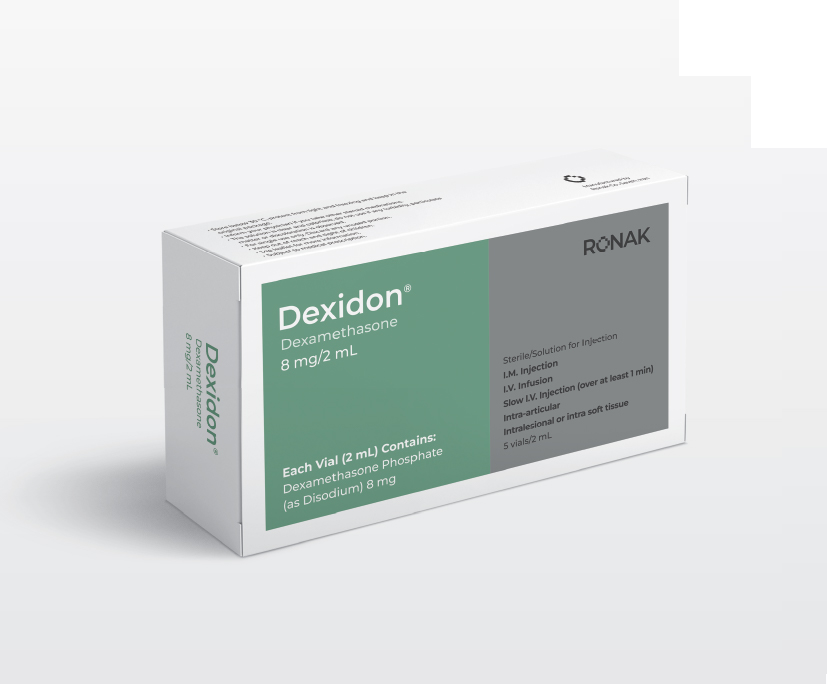


Dexidon®
Generic name: Dexamethasone
Dosage form: Injectable solution containing 4 mg Dexamethasone per mL
Therapeutic class: Corticosteroid
Indications: This medicine is used in the treatment of various allergic, hematologic, skin, neoplastic, rheumatic, autoimmune, nervous system, kidney, and respiratory diseases.
Dexidon® is a long-acting corticosteroid medicine. Through mechanisms including reducing the production of inflammatory mediators and suppressing neutrophil migration, this medicine reduces inflammation. In addition, Dexamethasone suppresses the immune system and also shows an anti-nausea effect.
- Various allergies
- Various hematologic, skin, neoplastic, rheumatic, autoimmune, nervous system, kidney, and respiratory diseases
- Primary or secondary adrenocorticoid deficiency
- Management of shock and cerebral edema
- Cerebral edema at high altitude or acute mountain sickness
- Prevention of nausea and vomiting related to chemotherapy, radiotherapy, and surgery
- Acute asthma attack
- Cancer-related malnutrition
- Adjunctive treatment for pain caused by advanced cancer
- Moderate to severe acute respiratory distress syndrome
- Hospitalized patients with COVID-19
- Acceleration of fetal lung maturation
- Adjunctive and short-term treatment in arthritis, acute and subacute bursitis, and post-traumatic osteoarthritis
- Alopecia areata
- Keloid
- Localized and inflammatory lesions in lichen planus, neurodermatitis, and psoriasis
- Discoid lupus
Injectable solution containing 4 mg Dexamethasone per mL
Dexidon® is a ready-to-inject solution and does not require dilution.
- Direct intravenous injection of Dexidon® should be performed slowly over 1 to several minutes.
- Dexidon® may also be administered by intermittent intravenous infusion, also known as intravenous piggyback, over 5–30 minutes.
- Rapid injection of Dexidon® may be associated with perineal irritation, especially at higher doses. Therefore, to prevent perineal irritation, it is preferable to dilute the medicine further and administer it more slowly by intermittent intravenous infusion.
- Dexidon® at a concentration of 4 or 10 mg/mL may be administered by deep intramuscular injection.
- This medicine must not be injected epidurally.
- Intra-articular injection is not recommended in unstable joints.
- Dexidon® must not be injected into areas of the body that are infected.
- In patients with cancer, hepatitis B screening should be performed before starting treatment with Dexamethasone and anticancer medicines.
- Patients who have spent time in tropical climates or have diarrhea of unknown cause should be evaluated for amebiasis before starting treatment.
- Blood pressure, hemoglobin level, blood glucose and potassium, presence of blood in the stool, and bone density should be monitored.
- If symptoms of muscle injury occur, creatine kinase should be monitored.
- If Dexamethasone is used in children, height, weight, and growth rate should be monitored.
- Suppression of the hypothalamic-pituitary-adrenal axis should be evaluated.
- The possibility of tuberculosis reactivation should be assessed in patients who have latent tuberculosis or show a positive reaction to the tuberculin test.
- If Dexamethasone is used chronically, regular eye examinations are recommended.
- In treatments lasting longer than 6 weeks, changes in intraocular pressure should be evaluated.
- In patients with multiple myeloma, before starting Dexamethasone as part of combination therapy, a pregnancy test should be performed in patients who may become pregnant.
- Avoid using this medicine if there is a history of hypersensitivity to Dexamethasone or any other components of the formulation.
- Avoid using Dexamethasone in the presence of systemic fungal infections, bacterial infection of the blood, gastric and duodenal ulcers, glaucoma, or Cushing’s syndrome.
- Administration of live-virus or live-attenuated-virus vaccines during Dexamethasone use is not recommended.
- In patients with certain viral infections such as chickenpox or herpes, Dexamethasone injection is not recommended.
- During Dexamethasone use, the patient should be evaluated for adrenal insufficiency.
- During treatment with this medicine, it is preferable to increase intake of potassium, vitamin B6, vitamin C, vitamin D, folate, calcium, and phosphorus.
- This medicine suppresses the body’s immune system and increases the risk of various infections. Therefore, wash your hands regularly and avoid people with infections, colds, or influenza. Inform your doctor if symptoms of infection occur, such as fever, chills, severe sore throat, earache, cough, or sputum.
- If you have hepatitis B or a history of hepatitis B, consult your doctor before using this medicine.
- Contact your doctor if symptoms of psychiatric illness appear or worsen.
- Contact your doctor if symptoms related to high blood sugar occur.
- Contact your doctor if symptoms of Cushing’s syndrome occur, such as weight gain in the upper back or abdomen, moon-shaped face, or severe headache.
- Dexamethasone should be prescribed with caution in patients with confirmed or suspected pheochromocytoma, as well as in patients with systemic sclerosis.
- Contact your doctor if you experience severe abdominal pain, vomiting, severe dizziness, fainting, muscle weakness, severe fatigue, reduced appetite, or weight loss.
- Contact your doctor if you have symptoms of potassium deficiency, such as muscle pain, weakness or cramps, and abnormal heartbeat.
- Contact your doctor if symptoms of pancreatitis occur, such as abdominal pain, severe back pain, and vomiting.
- Contact your doctor if you have symptoms of high blood pressure, such as severe headache or dizziness, fainting, or vision changes.
- Contact your doctor if you experience shortness of breath, sudden weight gain, vision changes, seizure, skin changes, colored lesions on the skin or mouth, chest pain, abnormal heartbeat, bone or joint pain, or swelling in the hands or feet.
- Dexamethasone should be used with caution in patients who have heart failure or high blood pressure, or who have a history of heart attack.
- This medicine should be used with caution in patients with gastrointestinal problems, such as gastric ulcer and ulcerative colitis, and in patients with liver or kidney failure.
- In patients with myasthenia gravis, symptoms may worsen during the first 2 weeks of Dexamethasone use. In this case, contact your doctor.
- If thyroid status changes, meaning hypothyroidism or hyperthyroidism develops, dose adjustment may be required.
- Dexamethasone should be prescribed with caution in patients with a history of seizures.
- In elderly people, it is preferable to use Dexamethasone at the lowest dose and for the shortest possible time.
- High doses of Dexamethasone should not be used for the management of head trauma.
- Use with caution in patients with a history of ocular herpes simplex. If active ocular herpes simplex is present, avoid using the medicine. Dexamethasone is not recommended for the treatment of optic neuritis.
- Treatment should be discontinued by gradually reducing the dose.
- Patients under stress may require higher doses of Dexamethasone.
- Before using Dexamethasone during pregnancy or breastfeeding, consult your doctor or pharmacist.
- The decision to use Dexamethasone during pregnancy or breastfeeding varies depending on the type of disease and should be made by considering the benefits of using the medicine for the mother and the risk of adverse effects in the fetus.
Like all medicines, alongside its desired therapeutic effects, this medicine may cause some unwanted side effects; however, these effects do not occur in everyone. Possible side effects of this medicine include:
- Gastrointestinal problems
- Severe sweating
- Hiccups
- Increased appetite
- Dizziness, weakness, and fatigue
- Headache
- Sleep problems
- Increased risk of osteoporosis
Consult your doctor or pharmacist regarding the use of Dexamethasone together with other medicines or supplements.
Each package contains 5 vials of Dexidon®.
- Store the medicine below 30°C, away from freezing and light.
- Keep the medicine out of the reach of children.
- The medicine may be used until the end of the month stated in the expiration date on the package. Avoid using or keeping expired medicines.
- Dexamethasone systemic: Drug information, UpToDate 2025
- EMC SmPC source listed on the original page.