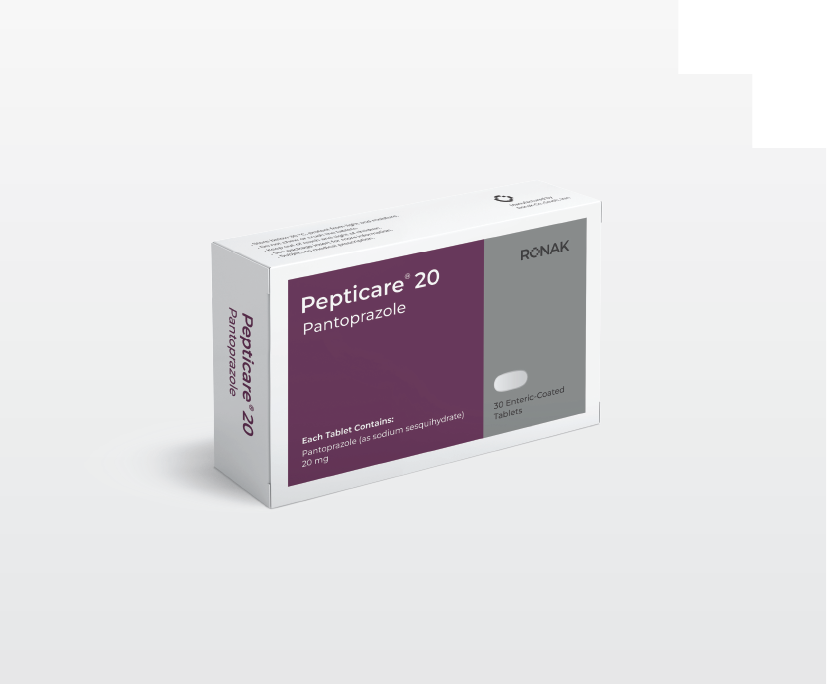


Pepticare®
Generic name: Pantoprazole
Dosage form: Enteric-coated tablet in two strengths: 20 mg and 40 mg
Drug class: Gastric acid secretion controller
Indications: This medicine is used to treat stomach problems, including reflux and gastric ulcer.
Pepticare® belongs to a group of medicines called proton pump inhibitors, which reduce stomach acid secretion.
- Return of stomach acid to the esophagus, or reflux — GERD
- Dyspepsia
- Prevention of excessive stomach acid secretion caused by pancreatic or duodenal tumors — Zollinger–Ellison syndrome
- Prevention and treatment of gastric and duodenal ulcers
- Treatment regimen for Helicobacter pylori infection
- Upper gastrointestinal bleeding
- Prevention of ulcers caused by nonsteroidal anti-inflammatory drugs — such as naproxen and mefenamic acid
- Prevention of aspiration — airway obstruction caused by entry of foreign material — during anesthesia
Enteric-coated tablet in two strengths: 20 mg and 40 mg.
Take Pepticare® exactly as directed by your physician. If you are unsure about the correct way to take the medicine, consult your physician or pharmacist.
Take Pepticare® 30 to 60 minutes before food, preferably before breakfast. If twice-daily use is needed, take it before breakfast and dinner.
Swallow Pepticare® whole. Do not chew, crush, or split it.
If you miss a dose, take it as soon as you remember. If it is almost time for the next dose, do not take the missed dose. Avoid taking two doses at the same time or taking an extra dose.
If you take more than the recommended amount, inform your physician immediately or go to a medical center.
- Bone density and fractures during long-term use
- Diarrhea caused by Clostridioides difficile infection
- Blood magnesium level
- Blood calcium level
- Gastrin level
- Signs of lupus
- Gastric acid secretion in patients with excessive acid-secretion disorders
- History of hypersensitivity to Pantoprazole or any component of the formulation
- History of hypersensitivity to other proton pump inhibitors (Omeprazole, Lansoprazole, Rabeprazole, or Esomeprazole)
- During Pantoprazole treatment, the use of some medicines may lead to serious adverse effects. Inform your physician about all medicines you are taking to help prevent drug interactions and unwanted effects.
- Inform your physician immediately if you have unexplained weight loss, difficulty swallowing, stomach pain or indigestion, vomiting or bloody vomiting, black or bloody stool, or severe or persistent diarrhea.
- If severe hypersensitivity symptoms occur (such as redness), swelling, skin rash, blisters, hives, itching, wheezing, tightness in the chest or throat, difficulty breathing, swallowing, or speaking, unusual hoarseness, or swelling of the mouth, face, lips, tongue, or throat seek medical care immediately.
- Long-term use of Pantoprazole may reduce vitamin B12 absorption. If symptoms of vitamin B12 deficiency occur, such as muscle weakness, fatigue, paleness, mood changes, or tingling in the limbs, vitamin B12 supplementation may be used after consulting your physician.
- Pantoprazole may increase the risk of diarrhea caused by Clostridioides difficile. Inform your physician immediately if you have symptoms such as stomach pain, very loose or watery stool, or bloody stool.
- Avoid long-term self-directed use of Pantoprazole without consulting your physician.
- Pantoprazole may affect the results of some laboratory tests. Inform your physician that you are taking this medicine before testing.
- Pantoprazole may reduce the therapeutic effects of clopidogrel. Inform your physician if you are taking clopidogrel.
Consult your physician or pharmacist before using Pantoprazole during pregnancy or breastfeeding.
Like all medicines, Pantoprazole may cause unwanted side effects along with its desired therapeutic effects, although not everyone experiences them. Possible side effects include:
- Headache or dizziness
- Abdominal pain, diarrhea, bloating, constipation, nausea, and vomiting
- Joint pain
Consult your physician or pharmacist about using Pantoprazole together with other medicines or supplements.
Each package contains 30 tablets: 3 blister strips of 10 tablets.
- Store below 30°C, protected from light and moisture.
- The medicine may be used until the end of the month stated in the expiry date on the package. Do not use or store expired medicines.
- Keep the medicine out of the reach of children.
- Do not remove the medicine from its original packaging before use.
- Pantoprazole: Drug information, UpToDate 2025
- Medicines.org.uk product information for Pantoprazole.