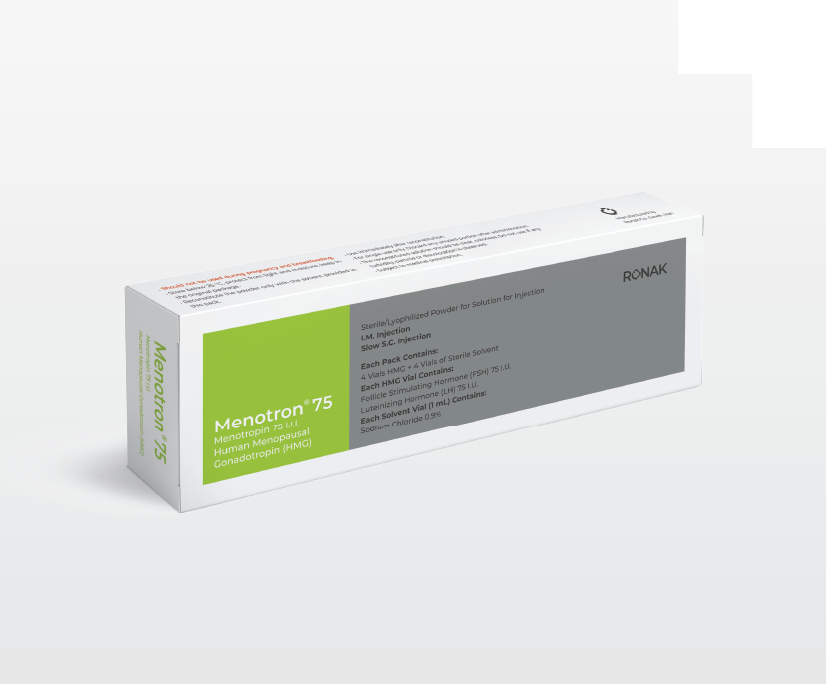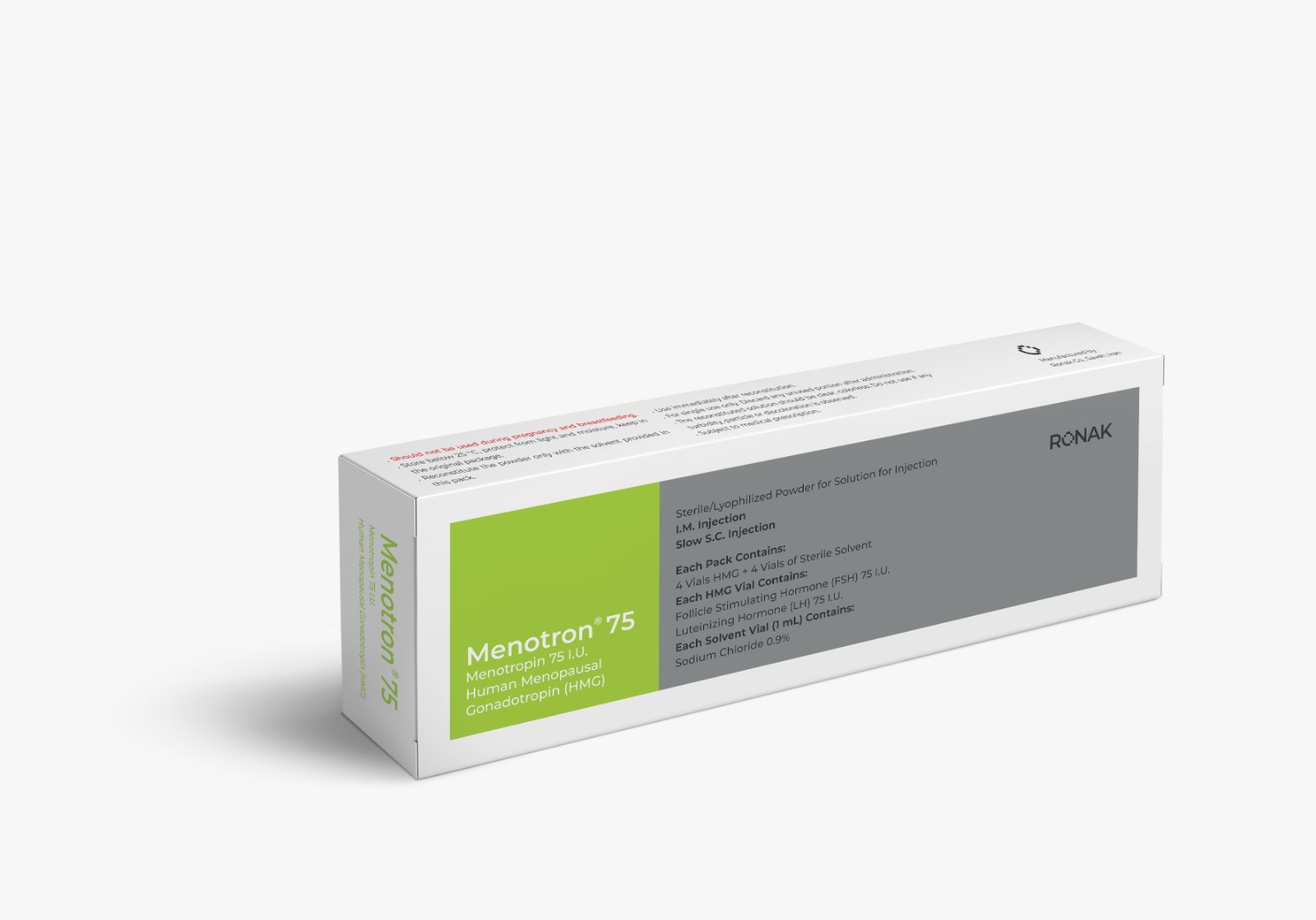


Menotron®
Generic name: Menotropin
Dosage form: Lyophilized powder containing highly purified menotropin, equivalent to 75 IU of human follicle-stimulating hormone (FSH) and 75 IU of human luteinizing hormone (LH), for preparation of an injectable solution.
Pharmacological class: Gonadotropin
Indications:
This medication is used for the stimulation of ovarian follicle development in women undergoing assisted reproductive technologies, and for the stimulation of spermatogenesis in men, in combination with hCG therapy.
Menotron® is a human gonadotropin extracted from the urine of postmenopausal women. It promotes the growth and maturation of ovarian follicles in women without primary ovarian failure. In men, it supports spermatogenesis when used in combination with hCG.
- Induction of multiple follicular development in assisted reproductive techniques in women without primary ovarian dysfunction
- Stimulation of spermatogenesis in men
Lyophilized powder containing 75 IU follicle-stimulating hormone (FSH) and 75 IU luteinizing hormone (LH) for preparation of an injectable solution.
- Wash and dry your hands thoroughly with soap and water.
- Remove the plastic caps from one vial of the drug and one vial of solvent, and disinfect the rubber stoppers with an alcohol swab.
- Using a 2 mL syringe, withdraw 1 mL of solvent from the vial with the white cap.
- Inject the solvent into the vial containing the powder with the green cap.
- Without removing the syringe, gently swirl the vial until a clear, particle-free solution is obtained (avoid vigorous shaking). Then withdraw the entire contents of the vial into the syringe.
Menotron® should be administered immediately after reconstitution. Patients requiring a single injection from multiple vials may dilute up to 6 vials of Menotron® in 1 mL of solvent.
Menotron® can be administered either intramuscularly or subcutaneously depending on the indication.
For subcutaneous injection, the preferred site is the abdominal area at least 3 cm away from the navel. To reduce local hypersensitivity reactions, the injection site should be rotated daily. The selected site should not be painful, bruised, red, or affected by any skin lesion.
For both subcutaneous and intramuscular injections, the needle should be inserted at a 90-degree angle to the skin. Intramuscular injections are administered deeper than subcutaneous injections. A quick needle insertion reduces pain.
In intramuscular injection, if the needle is correctly placed, aspiration is usually difficult. If blood enters the syringe, withdraw the needle and apply pressure with an alcohol swab until bleeding stops.
After injection, gentle massage of the injection site with slight pressure may help drug distribution and reduce pain.
Note: Each syringe, vial of drug, and solvent in the Menotron® package is for single use only. Dispose of all used materials appropriately after use.
If you miss a dose of Menotron®, consult your physician.
In case of administration of a higher-than-recommended dose, immediately inform your physician or seek medical attention at a healthcare facility.
- Monitoring of estradiol levels
- Ultrasound evaluation to assess follicular growth and development
Since the use of various tests for evaluating follicular development and ovulation is largely dependent on clinical judgment, no specific test can be definitively recommended.
- Pregnancy
- History of hypersensitivity to menotropins
- Uncontrolled adrenal or thyroid insufficiency
- Intracranial structural lesions (e.g., pituitary tumors)
- Ovarian enlargement or ovarian cysts (except in patients with polycystic ovary syndrome)
- Infertility conditions not associated with anovulation
- Elevated baseline FSH levels (suggestive of primary ovarian failure)
Menotropin should be prescribed by a physician specialized in infertility disorders.
During and after treatment with menotropin, ovarian hyperstimulation syndrome (OHSS) may occur. Although this is a known potential complication of ovarian stimulation in assisted reproductive techniques, patients should be carefully monitored for signs and symptoms to ensure prompt medical intervention if necessary.
In most cases, OHSS occurs after discontinuation of treatment, with peak risk approximately 7 to 10 days later. In severe cases, treatment must be discontinued and hospitalization may be required.
Use of menotropin is contraindicated during pregnancy.
It is not known whether menotropin is excreted in human breast milk. Due to the potential risk of serious adverse effects in the nursing infant, the physician must decide whether to discontinue the drug or stop breastfeeding, based on the importance of treatment for the mother.
Like all medicines, Menotron® may cause side effects in some individuals, although not everyone will experience them. Possible adverse effects include:
- Abdominal pain and cramping, abdominal distension or a feeling of fullness
- Injection site reactions, including inflammation, pain, and irritation
- Ovarian hyperstimulation syndrome (OHSS), with symptoms such as moderate to severe abdominal pain, abdominal distension and firmness, nausea, and vomiting
- Ectopic pregnancy
- Congenital abnormalities in the newborn
- Increased risk of multiple pregnancies
- Vascular and pulmonary complications
Consult your physician or pharmacist regarding the concomitant use of menotropin with other medications or supplements.
Each package contains four vials of lyophilized powder and four vials of solvent (0.9% sodium chloride solution).
- Keep out of the sight and reach of children
- Store below 25°C, protected from light and moisture
- Do not use after the expiry date stated on the packaging
- Keep the medicine in its original packaging until use
- Menotropins: Drug information, UpToDate 2025
- http://www.medicines.org.uk/emc/product/1294/smpc